
Bio links become dynamic hubs
Bio links are no longer just static lists. By 2026, they are the primary way to bypass social media algorithms that bury external content. As platforms tighten their grip on organic reach, your bio link is the only space you actually control to move followers toward a sale or a sign-up.
What’s changing everything is artificial intelligence. For a long time, link-in-bio tools were fairly static – you’d create a page and manually update it. Now, AI is enabling a new generation of bio links that are dynamic, personalized, and optimized for conversions. This isn't just about making links look prettier; it's about making them smarter.
Traditional tools often fall short because they treat all visitors the same. They can't adapt to individual preferences or behaviors. AI addresses this by analyzing data and tailoring the link experience, something previously impossible without significant manual effort. We're moving toward a future where your bio link isn't just a page, but a personalized portal.
Personalizing the visitor experience
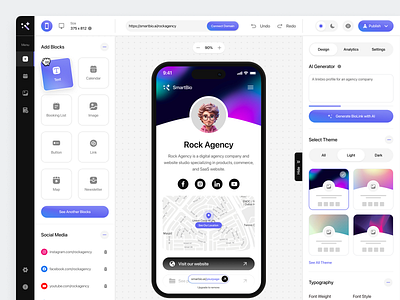
Imagine a bio link that shows different content to users based on where they’re coming from, what device they’re using, or even their past interactions with your brand. That's the power of AI-driven personalization. This works through dynamic content blocks – sections of your bio link that change based on pre-defined rules and, increasingly, machine learning.
The level of personalization isn’t always going to be one-to-one for every visitor. It’s more realistic to think about intelligent segmentation. For example, someone arriving from a TikTok campaign might see links related to that campaign, while a visitor from Instagram might see your latest product launch. This targeted approach dramatically improves click-through rates and conversions.
Personalization requires clear boundaries. If you use machine learning to track visitor behavior, you need a visible opt-out. Most creators in 2026 use 'privacy-first' toggles that show users exactly why they are seeing specific links, which actually helps build trust rather than scaring people off.
Smart Link Categorization & Tagging
Manually categorizing and tagging links can be a huge time sink for creators. AI simplifies this process by automatically analyzing the content of each link and assigning relevant tags. This relies on a combination of image recognition – identifying what’s in an image linked to – and natural language processing, which understands the context of the link’s description.
For example, if you link to a blog post about vegan recipes, AI can automatically tag it with "vegan,’ ‘recipes,’ ‘food,’ and potentially even specific ingredients. This makes it much easier for users to find what they’re looking for, even if they don"t know exactly what they need.
AI doesn’t just automate the process; it can also suggest relevant tags and categories that you might not have thought of. This is a real benefit for creators who are constantly producing new content. Tools like Your Custom Link are actively developing these features to streamline the content organization process.
- AI scans your destination pages to assign tags like 'vegan' or 'budget-friendly' automatically.
- Image Recognition: Identifies objects and themes within linked images.
- NLP Analysis: Understands the context of link descriptions.
- Suggested Tags: AI proposes relevant tags you might have missed.
Predictive ordering based on behavior
This is where AI gets truly powerful. Predictive link ordering uses machine learning algorithms to determine which links a user is most likely to click on, and then re-orders them accordingly. It's about anticipating user needs and presenting the most relevant options first.
The technology relies heavily on A/B testing. The AI continuously experiments with different link orders, tracking which configurations generate the highest click-through rates. Over time, it learns to identify patterns and predict user behavior with increasing accuracy. This isn't guesswork; it's data-driven optimization.
Sorting links based on behavior can feel like an invasion of privacy if it's too aggressive. The most successful setups let users know the page is 'optimized for you.' Early data shows this transparency increases clicks because users feel the page is helping them find what they need faster.
AI-Driven Content Preview Generation
A frustrating problem for many creators is the inconsistency of link previews. Sometimes they look great, sometimes they’re broken, and sometimes they’re just plain ugly. AI can solve this by automatically generating compelling previews for each link, including optimized images, headlines, and descriptions.
This is especially useful for links that lack good open graph data – the metadata that tells social platforms how to display a link preview. AI can analyze the content of the linked page and create a visually appealing and informative preview, even if the original page doesn’t provide it. It's a bit like having a dedicated preview designer for every link.
Crucially, AI can tailor these previews to different platforms. What works well on Instagram – a square image with a short, punchy caption – might not be effective on TikTok, which favors vertical videos and longer descriptions. The AI understands these nuances and adjusts the preview accordingly. This saves creators from having to manually create different previews for each platform.
Automated A/B Testing & Analytics
AI doesn't just make changes to your bio link; it also measures the results. Automated A/B testing allows you to experiment with different link layouts, content previews, and ordering strategies without any manual effort. The AI automatically splits your traffic and tracks key metrics for each variation.
The real value lies in tracking the right metrics. Click-through rates and conversion rates are important, but they don’t tell the whole story. You also need to consider time spent on page, bounce rate, and even customer lifetime value. This isn’t just about vanity metrics; it’s about understanding what drives real business results.
Tools like Adjust offer robust analytics features that integrate with bio link platforms. They allow you to track the performance of your links and identify areas for improvement. Understanding these metrics will inform your strategy and maximize the impact of your bio link.
- Click-through rates show which specific buttons are winning the most attention.
- Conversion Rate: Percentage of visitors who complete a desired action (e.g., purchase).
- Time Spent on Page: Average time visitors spend on your bio link.
- Bounce Rate: Percentage of visitors who leave your bio link without clicking on any links.
AI Feature Comparison: Bio Link Tools (2026 Outlook)
| Tool Name | Personalization | Categorization | Predictive Ordering | A/B Testing | Analytics |
|---|---|---|---|---|---|
| Your Custom Link | Medium | Auto/Manual | Qualitative Insights | Limited | Comprehensive |
| Linktree | Low | Manual | Basic | Limited | Standard |
| Beacons | Medium | Auto | Basic | Qualitative | Detailed |
| Taplink | Low | Manual | None | None | Basic |
| Shorby | Medium | Auto | Basic | Qualitative | Standard |
| Bio.fm | Low | Manual | None | None | Basic |
Illustrative comparison based on the article research brief. Verify current pricing, limits, and product details in the official docs before relying on it.

No comments yet. Be the first to share your thoughts!